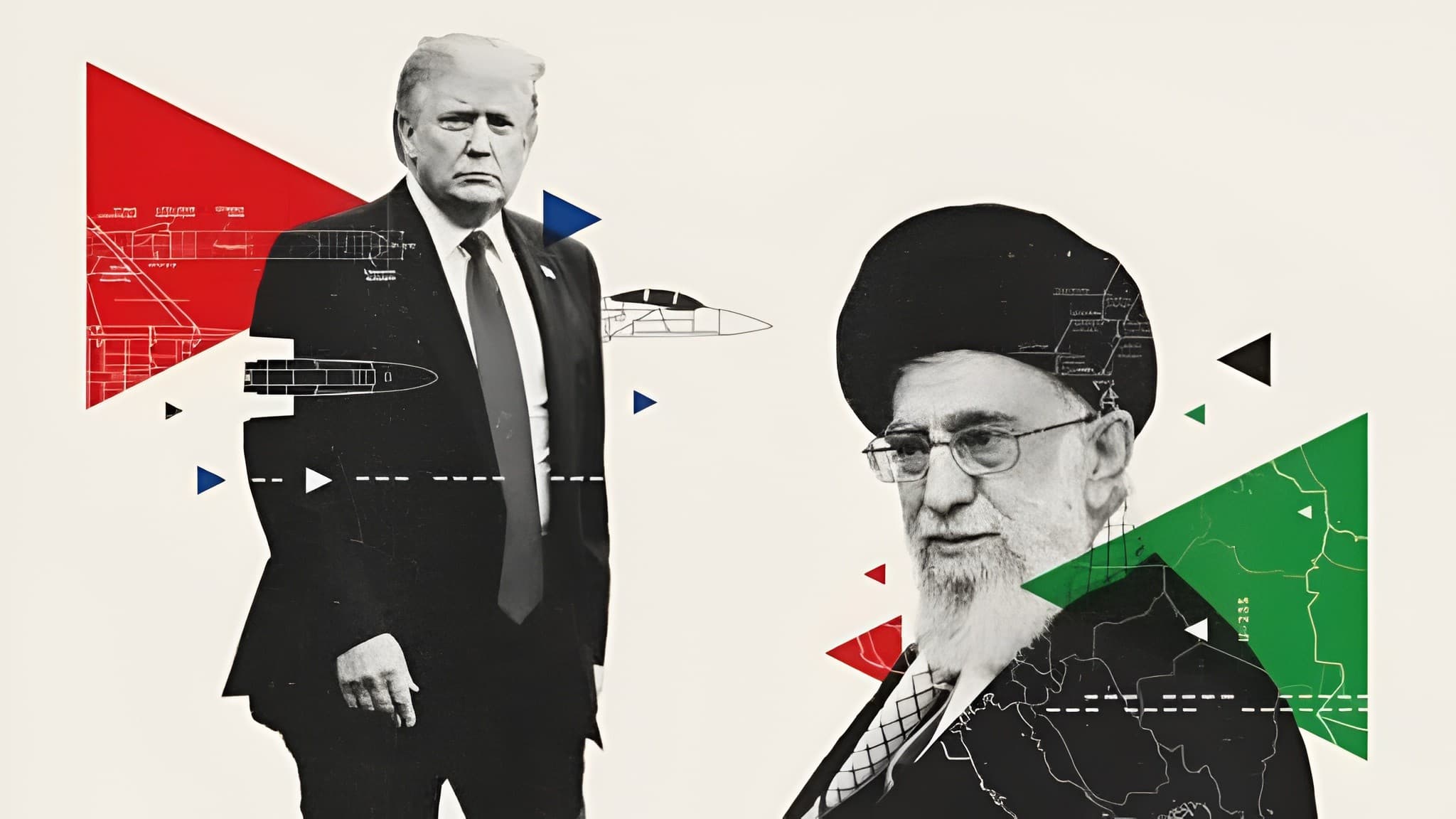
On Tuesday morning, Joe Kent, Director of the National Counterterrorism Center, retired Green Beret with eleven combat deployments and Gold Star husband, posted his resignation letter on X. It was addressed to the President. Within a few paragraphs, it stopped reading like a policy objection.
Kent wrote that the United States had started the war "due to pressure from Israel and its powerful American lobby." He accused high-ranking Israeli officials of deploying "a misinformation campaign" to deceive the President. He called the Syrian civil war that killed his wife Shannon in 2019 "a war manufactured by Israel." He ended by urging President Trump to "reflect upon what we are doing in Iran, and who we are doing it for."
Within twenty-four hours, Kent was on Tucker Carlson's podcast. "The Israelis drove the decision to take this action," he told Carlson, arguing that Jerusalem had "felt emboldened" to strike because Washington would "just have to react." As the conversation went on, it drifted somewhere darker. Kent started treating the assassination of Charlie Kirk as a "data point," talking about "unanswered questions" and a possible "foreign nexus" in a case authorities say was a lone-gunman killing. He insisted he wasn't "making any conclusions," but the insinuation was obvious to anyone listening.
Three weeks into the war, the Trump administration has failed to produce a single coherent explanation for why this war was necessary. The rationale has shifted at least four or five times, with the President himself alternating between declaring victory and demanding unconditional surrender — sometimes on the same day. A war without a defined objective is also a war without a natural endpoint. It is a recipe for another forever war. And when the government won't explain why it chose this war, people will construct their own explanation. The one gaining the most traction right now is among the oldest and most dangerous in Western history.
Joe Kent's letter did not emerge from nowhere. The antisemitism problem in the MAGA coalition predates this by years. Nick Fuentes, an open Holocaust denier, dined with the President at Mar-a-Lago in November 2022. Trump never fully repudiated him. Candace Owens spent the better part of 2023 and 2024 drifting from Israel skepticism into outright antisemitic conspiracy. Tucker Carlson platformed Fuentes for a two-and-a-half hour interview last October that drew over twenty million views. Fuentes blamed "organised Jewry" for America's problems. Carlson sat nodding. Ted Cruz called it "an existential crisis in our party" in front of the Republican Jewish Coalition.
The Infrastructure, the influencers, the audience, the vocabulary. All of it was in place before a single bomb fell on Tehran. It just didn't have a story compelling enough to break into the mainstream. Then the war started.
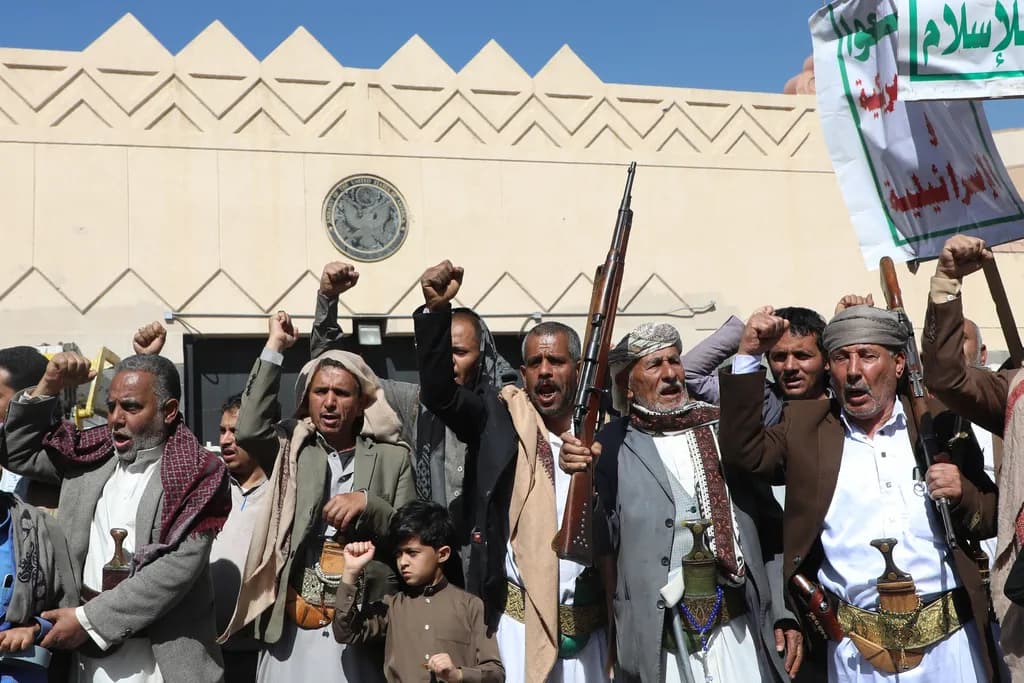
OCTOBER 2023 – 2025
Over two years, Iran's regional proxy network is systematically degraded. Hamas is decimated in Gaza, Hezbollah is severely weakened in Lebanon, and the Assad regime falls in Syria.
Pre-war antisemitism infrastructure
The antisemitic turn within MAGA did not begin with the Iran war. It was built over years by ideologues who created the rhetoric, commentators who normalised it, a broadcaster who delivered it to tens of millions, and an online ecosystem that kept it circulating in between.
The Network
Click a figure or theme to explore connections. Theme proximity and connection strengths are editorial estimates based on public statements, interviews, and media output. This visualization is illustrative, not exhaustive.
Nick Fuentes and proximity to power
Nick Fuentes was already a nationally recognisable far-right influencer whose worldview centers on Holocaust denial, ethnic nationalism, and antisemitic conspiracy. He has expressed admiration for Hitler and denied the October 7th atrocities carried out by Hamas, calling them "all a lie" and "none of it was real". He first broke into the mainstream when he dined with President Trump at Mar-a-Lago alongside Kanye West in November 2022. His profile and influence have only grown since.
Fuentes is not a lone crank but a node. He has built a movement of young, online activists who call themselves Groypers, and he has proven capable of converting fringe rhetoric into mainstream political pressure. His talking points have a way of surfacing in more respectable mouths within days.
When the war began he immediately framed it as a "Coalition breaking betrayal". He called regime change in Iran "a complete betrayal of what this entire movement is about" and asked: "What does this administration do other than cover up the Epstein files, embezzle money through government contracts and bring us to war for Israel?" He didn't stop at criticism. He told his followers to abandon the Republican Party entirely, saying anyone who still supported the GOP after being "dragged into a regional war for Israel" was beyond saving. An ultimatum from a man the party has spent three years pretending it can ignore.
“The main challenge to [national unity] is organized Jewry in America.”
Candace Owens and the drift from anti-Israel rhetoric into antisemitic mythology
If Fuentes provided the ideology, Owens gave it a wider audience. Owens's trajectory from conservative commentator to one of America's most prominent antisemitic voices shows the same pattern of collapsing distinction between critique and conspiracy. She did not arrive at blood libel overnight. She got there through a series of steps that each felt, to her audience, like a reasonable next move. Questions about U.S. foreign policy toward Israel became questions about Jewish political influence, which became invocations of dual loyalty, which became medieval conspiracy about Jewish supremacy. The Daily Wire fired her. Her audience followed. Dennis Prager published a fifteen-page public rebuke. It didn't slow her down. Trump distanced himself from her. It didn't matter. Each intervention reinforced her narrative that powerful forces were trying to silence the truth.
When the war began she applied the framework her audience had already accepted to a live news event. She blamed Israel for the September 11 attacks. She called Jewish communities "dangerous" and told her followers to locate their nearest Chabad house. She became the primary megaphone for the conspiracy theory that Charlie Kirk was assassinated by Israeli operatives. But her audience, large as it is, is self-selecting. The people who follow her already agree with her. The question was always whether this rhetoric could reach beyond the converted. That required a different kind of platform.
Tucker Carlson and the amplification of antisemitic rhetoric
Tucker Carlson's role is different from Fuentes or Owens. He insists he is not antisemitic, and his core public identity is as an America First conservative who opposes new US wars in the Middle East. He reportedly met Trump three times in the Oval Office in the month before the strikes to argue against attacking Iran. That anti-war conviction is genuine and widely shared. What matters, though, is who he elevates and what he tolerates when he makes the case.
He gave Nick Fuentes, an open Holocaust denier, a two-and-a-half-hour interview that reached over twenty million people and framed it as asking questions the mainstream won't. Since the war began he has claimed the Chabad-Lubavitch movement is "behind the war in Iran" and hosted Joe Kent to argue that "the Israelis drove the decision" and to float theories about Israeli involvement in Charlie Kirk's assassination. In each case the America First argument is front and center. In each case the antisemitic framework comes along for the ride.
Carlson may not intend to build an antisemitic pipeline. He is building one anyway. When you repeatedly choose antisemitic voices as your most prominent vehicles for an anti-war argument, you are normalising the idea that the most compelling explanation for why America is at war is that Jewish power put it there. You don't need Fuentes or conspiracy theories to argue that the war lacks clear objectives or that American service members shouldn't die for regime change in Iran. Carlson has chosen, again and again, to make the case through antisemitic voices instead.
The wider ecosystem
Fuentes, Owens, and Carlson are the most visible figures but they sit atop a much larger infrastructure. The release of the Epstein files in early 2026 became a massive vehicle for antisemitic conspiracy, reframing a real scandal into a narrative about Mossad blackmail operations and Jewish elite control of American politics. Owens told her followers to search the files for the word "goyim" and "be sure to tag a Christian who needs to wake up." Carlson hosted episodes linking Epstein to Israeli intelligence. The framework this established, that shadowy Jewish power operates through hidden manipulation of American institutions, would prove ready made when the war began. Within 48 hours of the first strikes, accounts across X had rebranded the military operation "Operation Epstein Fury" generating over 91,000 mentions and fusing the two conspiracies into one.
Underneath all of this sat cruder machinery. Stew Peters, a far-right podcaster with over a million followers, launched a cryptocurrency called "Jew Proof" marketed as a way to bypass "the Rothschild Jew run Talmudic cabal financial system." The phrase "Zionist Occupied Government," once confined to neo-Nazi forums, was migrating into mainstream-adjacent platforms. The vocabulary, the narratives, and the audience were all in place. Then the war started.
The Catalyst
Track the conflict
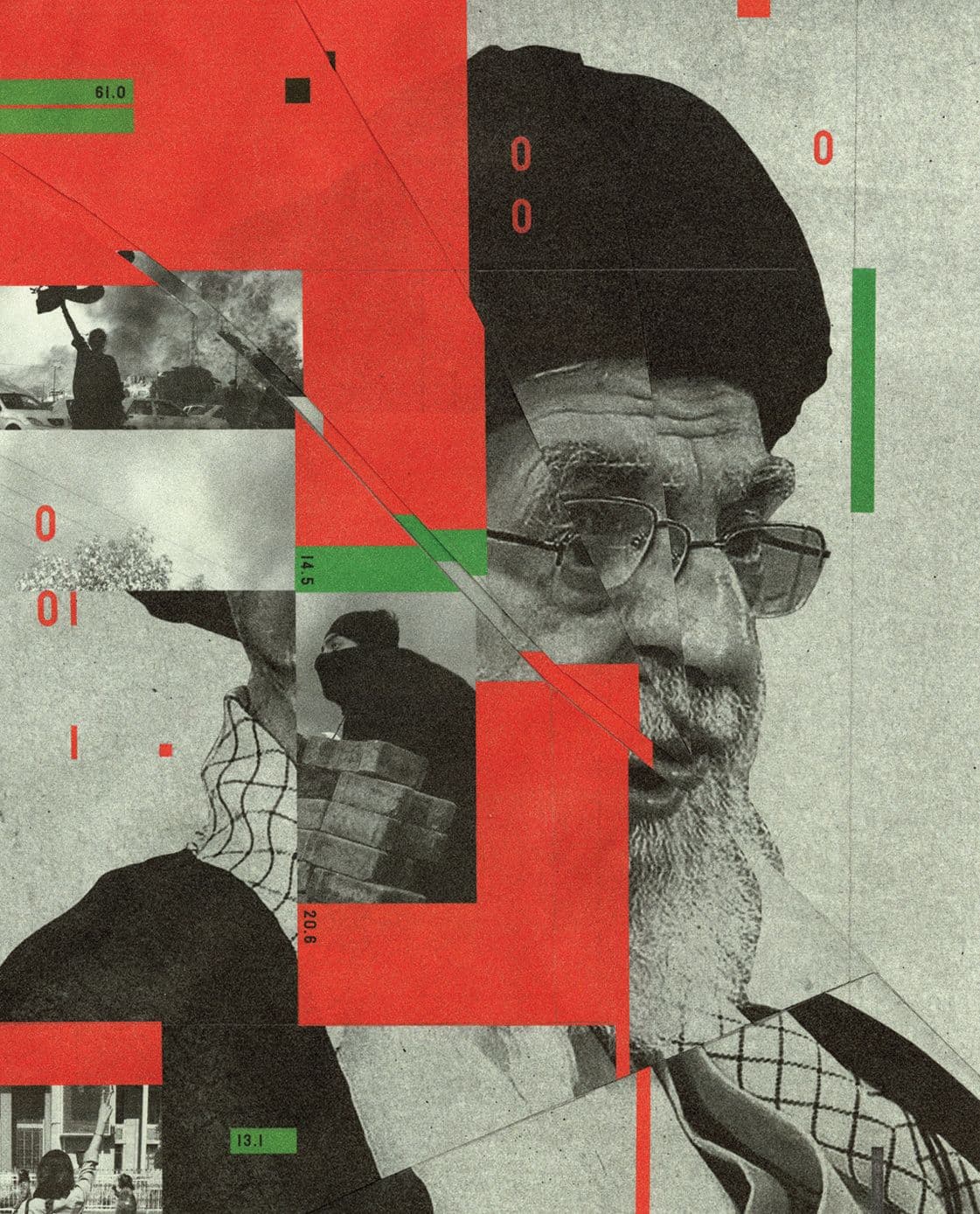
On February 28, the United States and Israel launched surprise airstrikes across Iran, killing Supreme Leader Khamenei and most of his senior leadership. Iran retaliated with missile and drone strikes across the region. American service members came under fire. And for three days, no senior administration official appeared publicly to explain why.
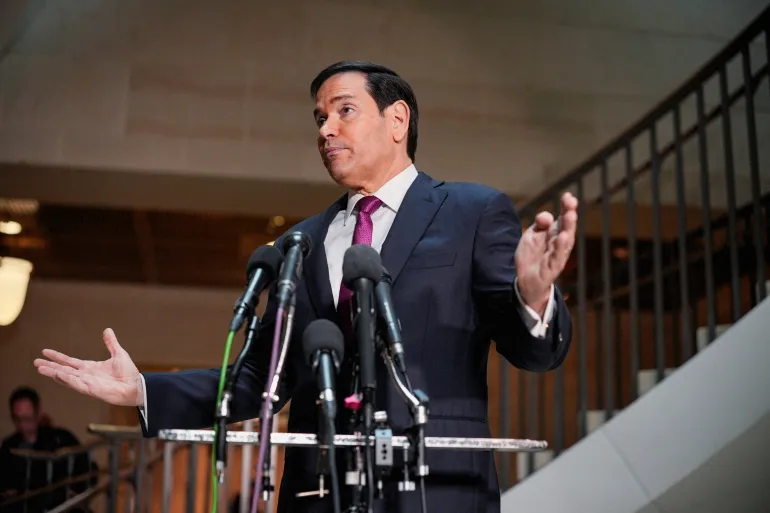
When Secretary Rubio finally spoke, it was to reporters on Capitol Hill before briefing congressional leaders. He said: "We knew that there was going to be an Israeli action. We knew that that would precipitate an attack against American forces. And we knew that if we didn't preemptively go after them before they launched those attacks, we would suffer higher casualties." Rubio was simply describing operational sequencing but it was the single most useful sentence anyone in government could have given to the people primed to hear it. Within hours Matt Walsh from the Daily Wire told his millions of followers that Rubio was "flat out telling us that we're in a war with Iran because Israel forced our hand". Republican Senator Thomas Massie said the administration had admitted Israel "dragged us into" the war. Megyn Kelly blames "Israel firsters, like Mark Levin." Marjorie Taylor Greene declared "America first, not Israel first". Each one stepped slightly further than the last. Each one had Rubio's own words as cover. And within days the language that had started as a Cabinet official explaining logistics had been processed through the pipeline into something unrecognisable from what Rubio actually said.
The next day Trump contradicted Rubio from the Oval Office: "I might have forced their hand." Rubio reversed himself, snapping at a reporter who read his own words back to him: "Your statement is false." The walkback didn't matter. For one afternoon, the most senior official to explain the war had appeared to validate what the antisemitic fringe had been saying all along: Israel drove this. And the reason it spread so fast, the reason it proved impossible to contain, is that there was nothing to compete with it. The administration had left a hole where a justification for war should have been. The conspiracy filled it.
The Vacuum
There are at least three coherent justifications for why the United States went to war with Iran. The Administration has committed to none of them.
The first is the strategic window. Iran's proxy network has been systematically degraded since October 2023. Hamas was decimated. Hezbollah was severely weakened. Assad fell. If you are ever going to confront Iran directly, this is the moment. The second is humanitarian. The regime killed thousands of its own protesters in January, triggering the largest uprising since 1979. Iran's government is deeply unpopular at home and facing open revolt. American military action could accelerate a transition that the Iranian people are already demanding. The third is the nuclear threat. Last year's Twelve-Day War was sold as having set back Iran's nuclear program "for generations," in Netanyahu's words. The current war itself is evidence that this was not true, and that a more permanent solution was needed.
Each of these is defensible and each has a clear objective. People might disagree, but they could at least argue with a coherent position. The strongest version of the case is not hard to construct. The Iranian regime has been the primary architect of instability in the Middle East for decades. It has armed and funded proxy wars across the region. It has pursued nuclear weapons in defiance of international agreements. It is brutally repressive at home and openly committed to the destruction of a US ally. A reasonable case exists that the world is more secure without this regime in power, and that the current moment, with Iran's proxies dismantled and its population in revolt, represents the best opportunity in a generation to achieve that outcome. You don't have to agree with this case. But you can engage with it. You can debate it. You can hold a government accountable for whether it is achieving the objectives it set out.
The administration has given the public none of this. In three weeks of war, no senior official has articulated a single clear objective and committed to it. On the day after the strikes, not one Cabinet member appeared on a Sunday show to make the case. When Secretary Rubio finally spoke on March 2, he inadvertently framed the war as Israel's initiative rather than America's. Trump told CBS the war was "very complete, pretty much" on the same day he told a Miami audience "we've already won in many ways, but we haven't won enough." He demanded Iran's unconditional surrender on March 6. His press secretary walked it back the next day. By the second week, Senator Mark Warner, the top Democrat on the Intelligence Committee, said the goals had changed "four or five times."
This is not incompetence. A war without a defined objective is a war where victory can be declared at any time. There are no benchmarks to miss, no promises to break, no admissions of failure required. The rationale shifts with the audience. Hawks hear regime change. Skeptics hear it will be quick. The strategic ambiguity that serves Trump politically has a cost he has either not considered or does not care about. When millions of Americans ask the most basic question a democracy can ask of its government, why are we at war, there is nothing there.
And when there is no answer, people find their own. The one gaining traction across the American right is that Israel made us do it. That "the powerful American lobby" manipulated a president into sending American soldiers to fight someone else's war. The language escalation tells the story. Rubio says the US knew Israel would act. Within hours Walsh says Israel "forced our hand." Within days Massie says Israel "dragged us into" the war. Kelly blamed "Israel firsters." Owens calls the country "an occupied nation." Peters posts "no more Jew wars." Each step feels small. The cumulative distance is enormous. And at no point did anyone in the administration offer a counter-narrative with enough clarity or conviction to slow it down.
The reason the conspiracy is so effective is that it is built on a foundation of things that are actually true.
The collapsing distinction
Israel lobbied for this war. That is not a conspiracy theory. It is how states behave when they face existential threats. Iran has stated repeatedly and with increasing specificity its intention to destroy Israel. It has funded proxies on every one of Israel's borders as part of its Ring of Fire strategy. It has pursued nuclear weapons capable of making good on that promise. Israeli rhetoric toward Iran has also hardened significantly, driven by far-right coalition pressures and by a post-October 7 security environment in which no Israeli government can afford to tolerate even the perception of a threat to the homeland. A country that believes it faces annihilation will lobby, pressure, and maneuver to ensure its most powerful ally acts. That is foreign policy.
Israel has also acted unilaterally throughout this conflict in ways designed to deepen American commitment. Netanyahu called Trump on February 23 with intelligence that created a narrow window to strike Iran's senior leadership, accelerating a timeline originally planned for weeks later. The Israeli defense minister announced the assassination of Ali Larijani to the Wall Street Journal before informing the American president. None of this is hidden. None of it should surprise the Trump administration. But the framing that Israel can force the hand of a superpower that supplies its entire combat air fleet, funds billions in annual military aid, and retains the ability to cut off weapons transfers at any time inverts the actual power dynamic.
It is also true that Trump wanted this war. He has viewed Iran as a threat since his first term. He withdrew from the nuclear deal. He authorised the strike against Soleimani, the primary architect of Iran's proxy network and its most influential figure after the Ayatollah. He committed American long-range bombers to support Israel during the Twelve-Day War. He personally threatened military action after the January crackdown on protesters. A US official described him as "the most bullish person in the White House" on striking Iran.
The claim, however, that this president was "tricked" into war is almost insulting in its implications. The United States has the most powerful military on earth, the most advanced intelligence apparatus in the world, and an economy many times the size of Israel's. For every piece of advocacy from the undoubtedly powerful Israeli lobby, the president received equal or greater intelligence from his own advisors. Thousands of analysts at the Pentagon, at Langley, and at Fort Meade will have modeled every scenario. To claim that Israel simply manipulated its way past all of this is to deny American agency entirely. The question of whether Trump acted against the advice of his intelligence and military communities is one that only the people in the room can answer. But if there was a failure of judgment, that failure belongs to the administration. Not to a shadowy foreign conspiracy.
The distinction between these two realities is exactly what is collapsing. "Israel had strong reasons to want this war and advocated for it" is a description of how allied states operate. "Israel tricked America into fighting its war" is an antisemitic conspiracy theory that echoes centuries of claims about Jewish manipulation of gentile governments. The distance between these two statements is vast. The speed at which the public conversation has traveled from one to the other is not. And the reason it traveled so fast is that the administration refused to stand at the first statement and defend it. Saying "yes, Israel wanted this, and I wanted it too, because here is why" requires a clarity this administration has chosen not to offer. In its absence, the second statement wins.
Conclusion
There is a version of this conversation that a healthy democracy should be able to have. You should be able to question why the United States went to war with Iran. You should be able to criticise Israeli influence on American foreign policy and Israeli military conduct more broadly. You should be able to oppose this war without being called an antisemite. These are not fringe positions. They are positions of millions of Americans, including many Jewish Americans, including organisations like J-Street that have opposed this war from day one while simultaneously calling out antisemitic comments like the ones from Joe Kent.
But there is a line, and it is not hard to find. It runs between criticising the Israeli government and blaming the Jewish people. Between questioning a lobby's influence and claiming a shadowy ethnic group manipulates the world's most powerful nation into war. Between opposing a specific policy and reaching for conspiracy theories that are centuries old. The figures profiled in this essay did not stumble across that line by accident. They ran toward it. And millions followed.