In late 2025 the war in Ukraine grinds on, Russian Missiles still falling on Kyiv, Ukrainian soldiers still dying in the Donbas. But the struggle over Ukraine's future has moved elsewhere: to the conference rooms of Moscow and the waiting rooms of Brussels.
The conflict, now in its fourth year, has ceased to be treated by Washington as a struggle for the international rule of law. Instead, under the Trump administration, Ukraine is viewed as a "distressed asset" - a failing venture that must be liquidated, restructured, and cleared from the American balance sheet. The Americans are pursuing a ruthless form of transactional diplomacy designed to extract maximum value for Washington while offloading the costs onto European allies.
Washington negotiates. Brussels pays. That is the arrangement taking shape in 2025. The United States is drafting peace terms and reconstruction contracts while expecting Europeans to backfill the weapons already sent and underwrite whatever settlement emerges. European leaders, crippled by domestic crises, arrive late to the table and mostly as paymasters, sitting at home with their checkbooks ready while they wait to be told the price.
It is not supposed to be this way. Just months ago, European leaders spoke confidently of strategic autonomy, of the EU as a key pillar of the multipolar order, of a continent finally willing to shoulder the burden of its own defence. That optimism has curdled. The continent that proclaimed itself the guardian of the rules-based international order is now a passive financier of its own strategic diminishment.
We are no longer the Coalition of the Willing. We are the ATM of the alliance, dispensing cash to cover a settlement that mortgages our own security.
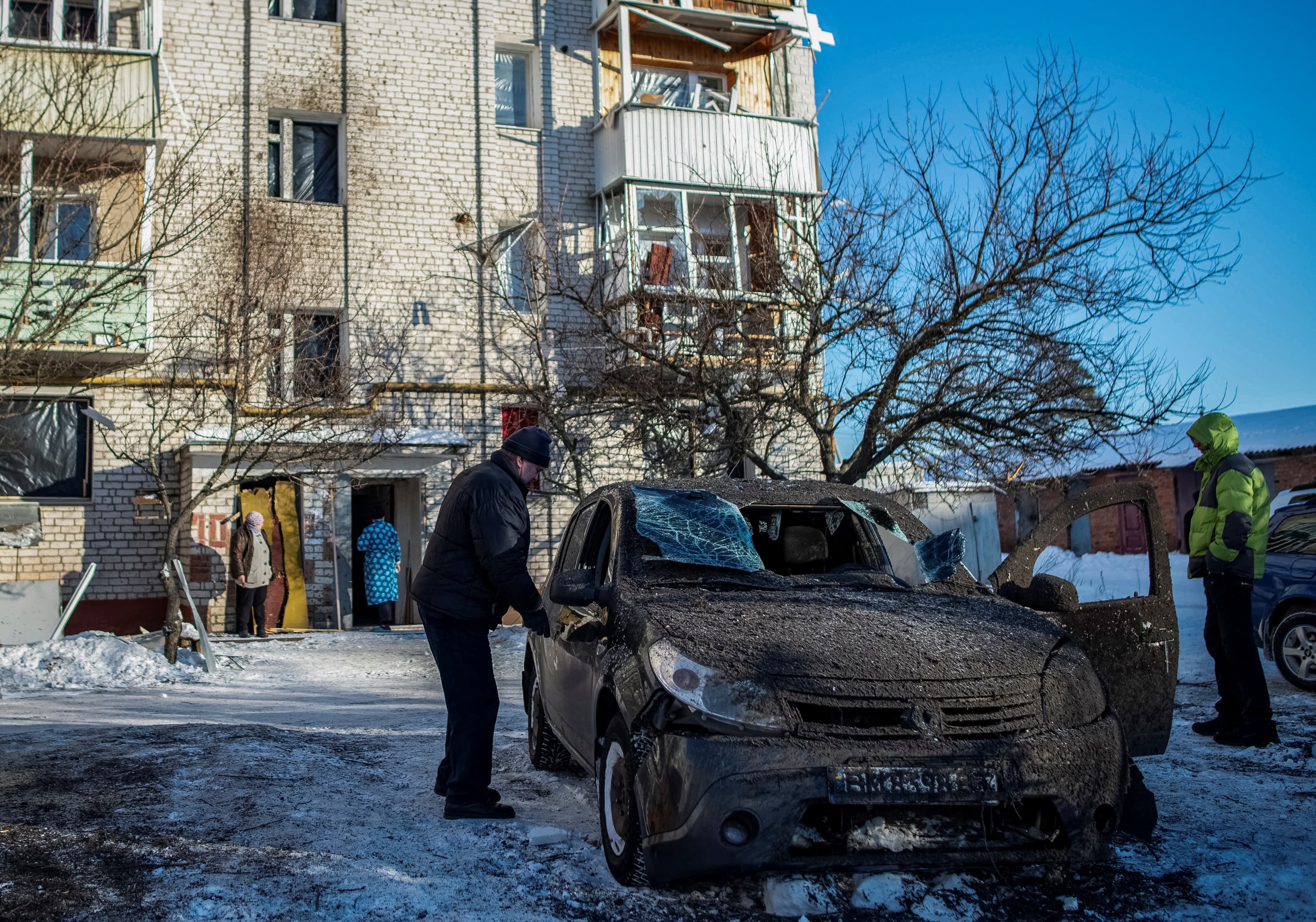
JANUARY 2025
Russian drones hit Kyiv on New Year’s Day, killing at least two people, injuring others, and damaging the National Bank of Ukraine building.
The Moscow dinner party Europe wasn’t invited to
On December 2nd, Steve Witkoff —Trump's special envoy for peace missions, golf partner and close confidant sat across from Vladimir Putin in the Kremlin's Senate Palace for five hours. It was Witkoff's sixth meeting with the Russian President. By his side sat Jared Kushner, for whom it was the first. The night before, the American negotiator had dined with Russian Direct Investment Fund chief Kirill Dimitriev at a Michelin-starred restaurant on caviar, quail, venison, and crab, then strolled through Red Square, posing for Russian state television cameras. Kremlin aide, and quasi National Security advisor, Yuri Ushakov called the talks "very useful, constructive, and highly substantive".
The most striking feature of this scene is not who is present, but who is not. No European leader sits at the table. There is no German chancellor, no French president, no British prime minister in the room where the contours of their security order are being haggled over. Europe appears in this conversation only as line items: as the jurisdiction that immobilised Russian central bank reserves, as the market that will finance reconstruction bonds, as the bloc that will have to write future cheques for border guards and air defence batteries. The negotiators in Moscow treat the Europeans as guarantors—on the hook for the debt, but absent from the room where the terms are written.
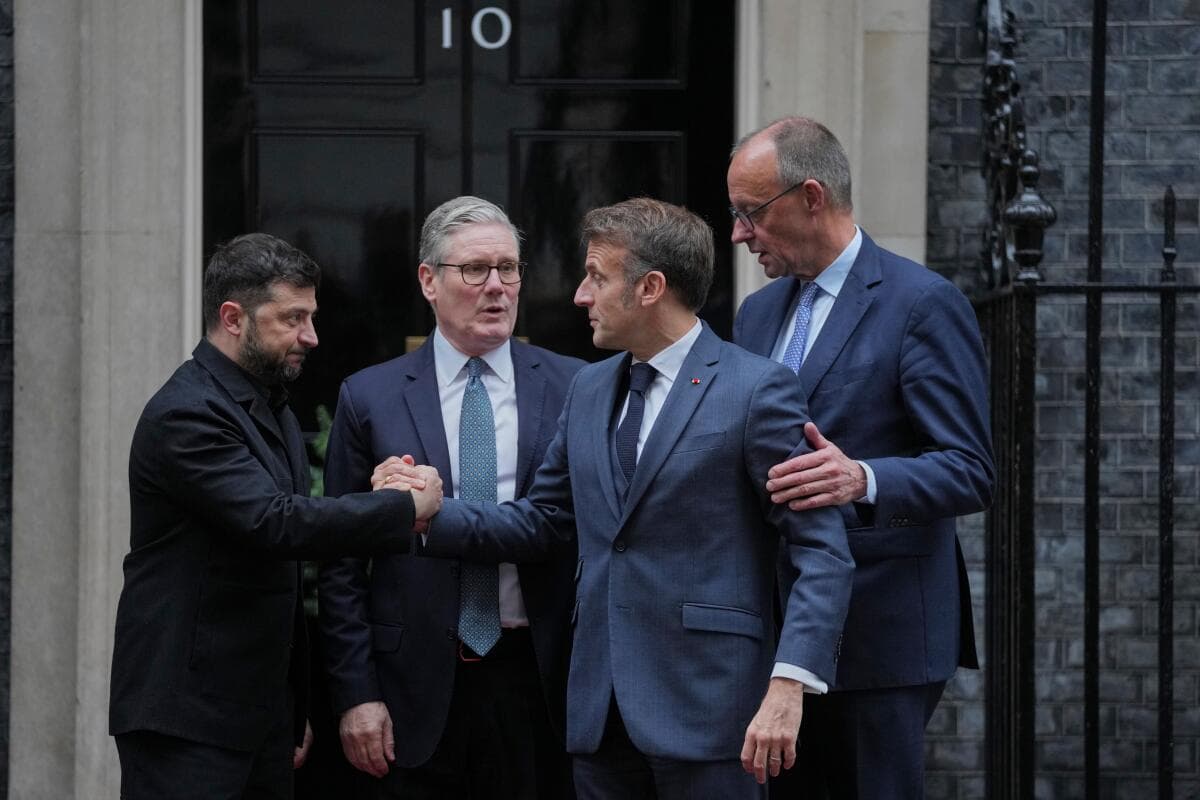
In Berlin, Paris and London, officials are not negotiating: they study leaks of the American plan, draft talking points about red lines that have already been crossed in someone else's drafting session, and prepare for hastily convened summits where they will be asked to provide political cover to decisions they did not make. When Zelensky meets European leaders in London days later, it is not to co-design the architecture of peace. It is to coordinate a response to terms already tested with Putin.
The borders of Europe are being discussed in the language of underwriting and asset management by American real estate developers in Moscow, while the elected leaders of Europe wait for the summary. The Western alliance has bifurcated. America plays. Europe pays. The bargain that took shape in the Kremlin conference room has already been rejected in Kyiv, but the hierarchy it reveals survives its failure: the continent that will live with the consequences is treated as an afterthought in the negotiations that define its future.
Why are Europe's leaders absent? Each one is fighting for political survival at home.
“Europe appears in this conversation only as line items—as financial guarantors disconnected from negotiations affecting their security.”
Germany: The Chancellor Who Cannot Move
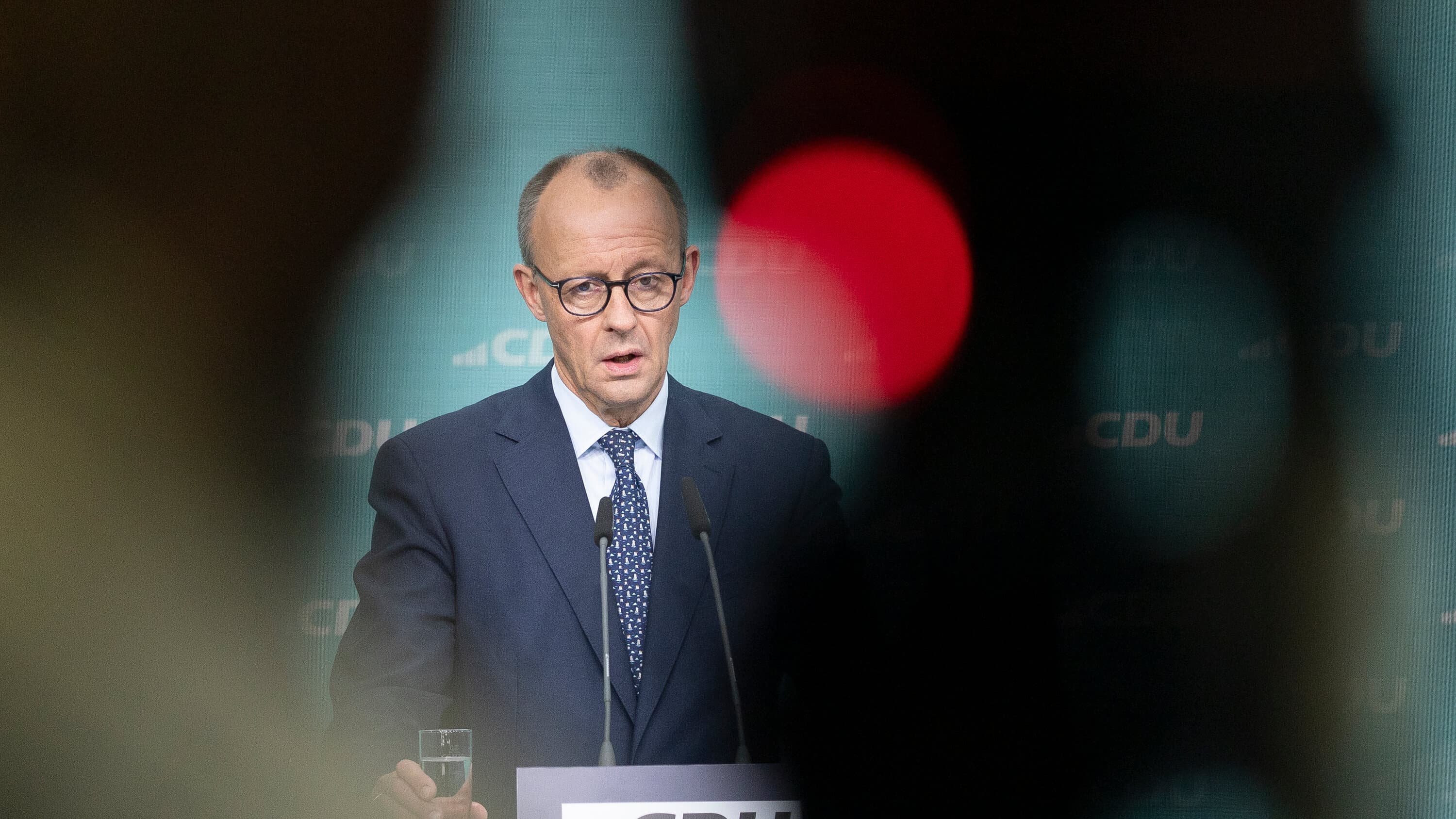
Chancellor Friedrich Merz's CDU/CSU-SPD grand coalition has survived just seven months and is already experiencing what Bloomberg called an existential crisis of its own making. Merz commands a thin majority and governs with coalition partners who do not share his instincts on Ukraine. The SPD remains opposed to delivering Taurus cruise missiles, arguing it would make Germany "a direct party to the conflict". Merz is caught between his hawkish rhetoric and his coalition's red lines. He cannot deliver the missiles without triggering a revolt from the SPD. He cannot rule them out without looking weak. So he hedges, delays, and hopes the question resolves itself.
Behind the parliamentary theatre lies what German officials describe, off the record as "Polygloom": a layered dread that any further confrontation with Russia over oil, gas, or the shadow fleet could trigger a second energy shock that German industry will not survive. The memory of 2022-23 is still raw —emergency LNG terminals, shuttered factories, sky-high power prices. Every proposal to strike at the Russian shadow fleet, to enforce insurance rules in the Baltic, or to tighten shipping sanctions is run through the same filter: Will this send prices up again, will this spook investors, will this hand the AfD another grievance. The AfD is already winning. It now leads national polls, advocating for direct negotiations with Russia and an end to arms deliveries.
Merz knows that Germany's credibility as a security actor depends on taking risks. He also knows that his fragile coalition, his nervous industrial base, and his rebellious backbenchers may not forgive him if he does.
France: All Talk, No Government
France is experiencing its worst political crisis since the Fifth Republic's founding in 1958. President Emmanuel Macron has cycled through four prime ministers in 2024-2025 alone. Michel Barnier lasted 91 days before losing a no-confidence vote—the shortest-serving PM in Fifth Republic history. François Bayrou became the most unpopular PM on record before falling over a €44 billion austerity package. The National Assembly remains split three ways, with no bloc able to command a majority.
The irony is bitter. France is the only European power with the military tradition, the nuclear deterrent, and the institutional self-image to lead on Ukraine. Macron alone has floated sending troops. Yet France is also the most paralysed—unable to pass a budget, let alone fund a war.
Macron's foreign policy ambitions have become untethered from his domestic capacity. He announces coalitions his government cannot sustain and makes threats his parliament cannot back. Putin, who watches French prime ministers fall like dominoes, has learned to wait out the rhetoric. The man who talks toughest delivers the least.
French National Assembly (2024)
Click on a party below to build a coalition
| Party | Seats | Change | Vote % |
|---|---|---|---|
NFP | 188 | +57 | 26.3% |
ENS | 161 | -76 | 24.7% |
RN | 142 | +53 | 37.1% |
LR | 48 | -13 | 6.2% |
OTH | 38 | -21 | 5.6% |
Click on a party to simulate coalition building. No bloc can reach 289 seats alone.
Britain: Not a Pound More
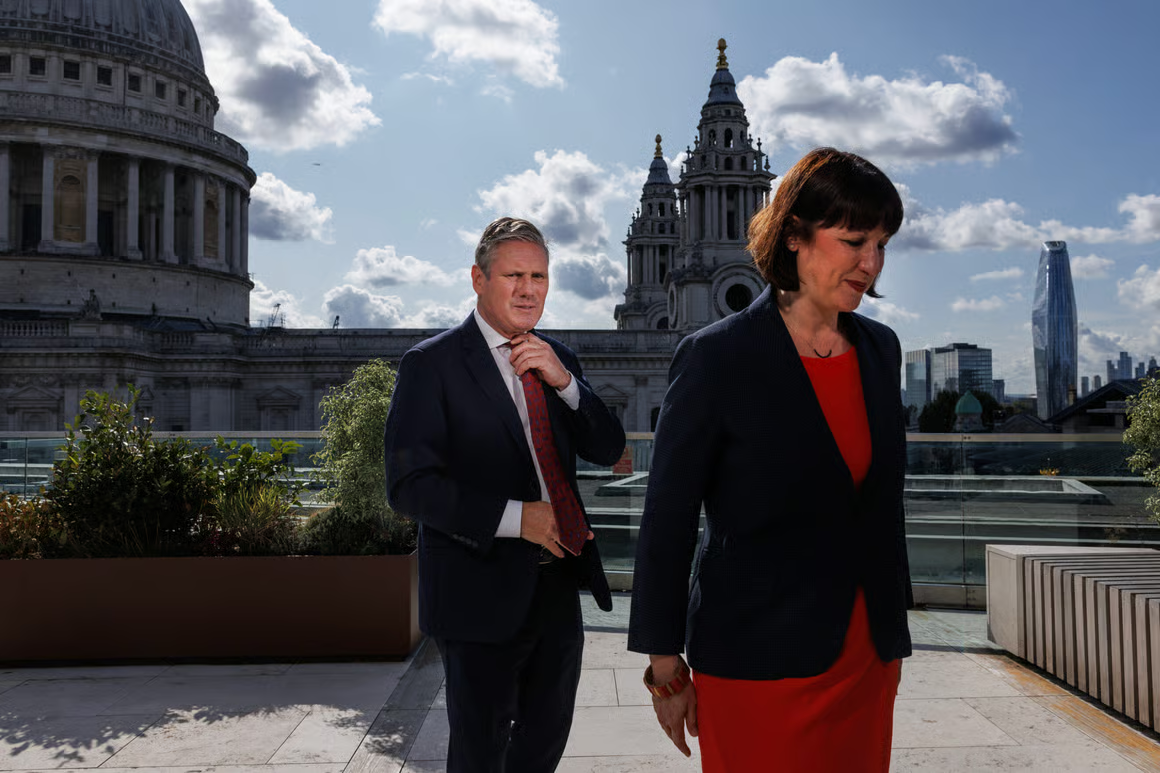
Prime Minister Keir Starmer faces the same trap as Merz. A government elected to fix domestic problems—the cost of living, NHS waiting lists, stagnant wages—finds itself unable to explain why billions should flow to Kyiv while public services crumble at home. Reform UK has weaponised this contradiction. Nigel Farage argues that Westminster elites care more about the Donbas than Doncaster, more about the liberal world order than the lived reality of British voters. The message has landed: Reform now leads in national polls and Starmer’s approval ratings have collapsed to levels last seen when Boris Johnson resigned in disgrace. Like Merz with the AfD, Starmer cannot ignore a populist insurgency that frames Ukraine support elite indulgence. The result is the same defensive crouch: hold existing commitments, promise no more, wait for the Americans to settle it.
The policy reflect the politics. Starmer’s November budget raised taxes by £26 billion while his Chancellor, Rachel Reeves, faced accusations of misleading Parliament about the fiscal situation. There is no money for ambition. The much-celebrated 100 year partnership with Ukraine, signed in January, contained no new funding—just a repacking of existing commitments. Britain’s £3 billion annual military support includes built-in off-ramps for when a ceasefire arrives. To fund even modest defence increases, Starmer slashed the foreign aid budget by 40 %. The message to Kyiv is unspoken but unmistakable: we will not abandon you, but do not ask for more. Britain, like Germany and France, has enough political capital to maintain the status quo—and not a pound more.
Asymmetric Pacifism
Germany, France, Britain—three governments, three crises, the same result. Each lacks the political capital to lead on Ukraine. Domestic paralysis explains why Europe cannot send troops, deliver missiles, or demand a seat at the negotiating table. It does not explain why Europe refuses to enforce rules that already exist. This is not principled pacifism—it is selective inaction dressed up as restraint.
The shadow fleet carries real risk. Russia has escorted these tankers with warships, and any interdiction invites escalation. Yet stopping the fleet requires no new treaties, no new capabilities, no new coalitions. The legal authority exists. The naval power exists. The justification is overwhelming. If Europe will not act here, in its own waters, against its own stated rules, it has forfeited the right to call itself a security actor at all.
The Oil Economy of War
The shadow fleet is a flotilla of aging, barely insured tankers that has become the financial lifeline of the Russian war machine. By late 2025, it comprises somewhere between 600 and 1,400 vessels, with over 400 crude tankers alone, many operating under flags of convenience and shell-company ownership designed to evade Western sanctions.
In 2022 and 2023 alone, over 230 shadow fleet tankers made 741 voyages through the Danish Straits, carrying an estimated $35 billion worth of Russian oil. Every voyage is a transaction that directly finances artillery shells, missiles, and occupation forces in Ukraine. The fleet is not adjacent to the war effort; it is the war effort converted into cashflow.
Europe possesses overwhelming naval power and unambiguous legal authority to deny passage to vessels engaged in sabotage, intelligence operations, and the financing of an active war against a NATO-adjacent state. Instead, Europe hides behind a treaty signed in 1857, a document drafted when steamships were novel and before the concept of hybrid warfare existed, and treats the systematic financing and staging of attacks on European territory as a maritime compliance issue. The 1857 Copenhagen Convention guarantees free passage for commercial vessels; it does not require European states to treat a deniable auxiliary of the Russian war effort as ordinary trade.
Nothing in that 19th-century text obliges Denmark or its neighbours to wave through vessels crewed by Russian military personnel, implicated in undersea sabotage, or used as platforms for hybrid attacks. The choice to respond with “spot insurance checks” and “enhanced oversight” rather than boarding, seizing, or turning back these ships is political, and everyone involved knows it. Europe treats this as a paperwork problem because treating it as a war would require acting like a belligerent. So it enforces the right of free passage for a hostile fleet that treats European waters as a firing line—and that fleet has become a platform for waging war against Europe itself.

Shadow Fleet as Hybrid Warfare Platform
What European publics have been slow to grasp—but what NATO intelligence services increasingly understand—is that the shadow fleet has become far more than an oil-smuggling operation. It is now a launch platform for Russia’s hybrid warfare campaign across Europe, a role rooted in Soviet-era maritime sabotage doctrine and weaponised with modern drone technology.
The operational logic is clear: the shadow fleet provides deniability, mobility, and access. Using ships allows Russia to operate much closer to Western Europe than land-based operations permit. The fleet is murky by design, making attribution difficult. Drone deployment requires specialised training and Russian-linked vessels provide both operational cover for trained agents and launch platforms for drones of limited range. Russian warships have been observed escorting shadow fleet tankers through the Baltic and even the English Channel, evidence that the fleet is now integrated into Russia’s broader military apparatus.
The results are already visible. In mid‑September, Polish and Dutch fighter jets scrambled under NATO’s quick‑reaction alert and shot down several Russian drones that had crossed into Polish airspace—the first time since World War II that Russian military assets were destroyed over NATO territory. Days later, Romania reported its first Russian drone incursion and launched F‑16s and Eurofighters to track it until it left Romanian airspace. Copenhagen Airport was forced to halt flights for hours after multiple drones appeared over the runways, and by November Brussels Airport had also shut down temporarily due to drone sightings while Dutch forces were trying, and failing, to shoot down drones over Volkel Air Base, which hosts a US Air Force squadron under NATO’s nuclear mission.
Russia is not launching most of these drones from its own territory. The operations are being staged from the shadow fleet itself. When drones appeared in Danish airspace in September, the oil tanker Boracay—a Benin-flagged vessel already blacklisted by the UK and EU for sanctions evasion—was tracked off the Danish coast at precisely the time of the incursions. French naval commandos boarded the vessel and briefly detained its Chinese captain. President Macron stated France could not rule out a connection between the ship and the drone attacks, though definite proof has not emerged. The Kremlin called it “hysteria.”
Europe treats this as a compliance problem. We document the threat, hold conferences, add vessels to sanctions lists, and tweak port-access rules—but we refuse to physically interdict suspect ships or defend our airspace against platforms we know are being used for sabotage. These drone incursions and cable cuts are systematic probes to see how far Russia can push NATO states without triggering Article 5, how much damage can be inflicted while the West hides behind legal thresholds and evidentiary standards designed for peacetime. Europe’s position is clear: unless you paint a flag on the missile and fire it from Russian soil, we will treat it as a law-enforcement issue.
This is what “asymmetric pacifism” looks like. Moscow wages a low‑signature, deniable campaign from tankers and trawlers; Europe answers with compliance memos and maritime communiqués. We insist on fighting a clean, rules‑bound conflict while the adversary fights a dirty, opportunistic one—and we congratulate ourselves on being too civilised to stoop to their methods, even when those methods are the only way to defend our own cables, runways, and airspace. We refuse to fight the war on the terms the adversary has chosen. In that refusal, the shadow fleet becomes the emblem of our failure: a hostile, mobile infrastructure of war that we could stop, but choose not to, because doing so would mean admitting that we are already in a fight.
Conclusion
“We are paying for a war we refuse to fight, a peace we did not negotiate, and a future we will not shape.”
In Moscow, American real estate developers negotiate the borders of Europe while European leaders sit at home, waiting for the summary. In Berlin, Paris, and London, governments too weak to survive a coalition revolt or a budget vote cannot muster the political capital to lead on Ukraine—or even to enforce their own maritime laws. In the Baltic, a hostile fleet sails through European waters every day, funding the war, launching drones, cutting cables, and Europe responds with compliance memos.
This is the Coalition of the Billing. We pay for the weapons. We will pay for the reconstruction, the refugees, the environmental disasters when the tankers rupture. What we will not do is fight—not at the negotiating table, not in the Baltic, not anywhere that requires us to accept risk or spend political capital.
A settlement drafted in Moscow and Washington, without European leverage, will leave the continent guaranteeing a truncated Ukraine with a capped military, bordering a Russia that has learned that aggression pay, and that Europe will pay the bill. The shadow fleet will continue to operate. The hybrid attacks will continue to probe. And the next crisis will find Europe exactly where this one did: absent, passive, and reaching for the checkbook.
Europe still has the capacity to change this. It has the naval power to stop the shadow fleet. It has the economic weight to demand a seat at the table. It has the legal authority to act. What it lacks is the will to admit that it is already in a fight and that the fight will not end because we refuse to show up.
We are paying for a war we refuse to fight, a peace we did not negotiate, and a future we will not shape.